
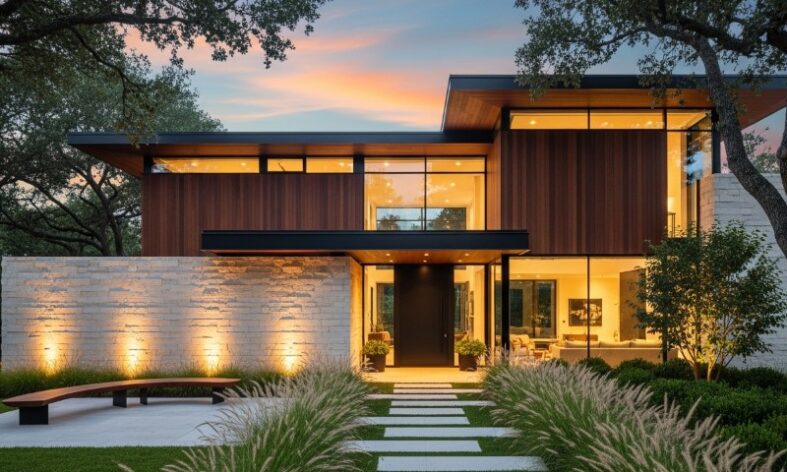
As can be seen from the name of the concept, minimalist home exterior design centers on clarity and restraint. Clean lines, simple forms, and intentional use of space define this approach.
Growing interest in minimalist homes comes from a desire for calm, uncluttered living environments. Exterior design plays a major role in setting that tone before stepping inside.
Material choice shapes both visual simplicity and tactile depth. Balance matters. Smooth surfaces paired with subtle textures create interest without visual noise.
Minimalist exteriors aim to deliver comfort, durability, and long-term ease while maintaining a composed and orderly look.
But for it to be as pleasant as it is, materials are crucial, right?
Let’s discuss them.
| Material | The Role | Common Use |
| Wood | Softens sharp lines and adds warmth | Siding accents, soffits, entryways |
| Concrete | Creates a strong, stable base | Walls, facades, pathways |
| Metal | Adds precision and definition | Roofing, wall panels, trim |
| Fiber Cement | Keeps design simple with flexible styling | Siding |
| Brick | Adds structure in a minimal way | Walls and facades |
| Glass | Opens up space and brings in light | Large windows, sliding doors |
| Stone | Adds controlled texture | Entryways, accent walls |
Wood (Natural Warmth)
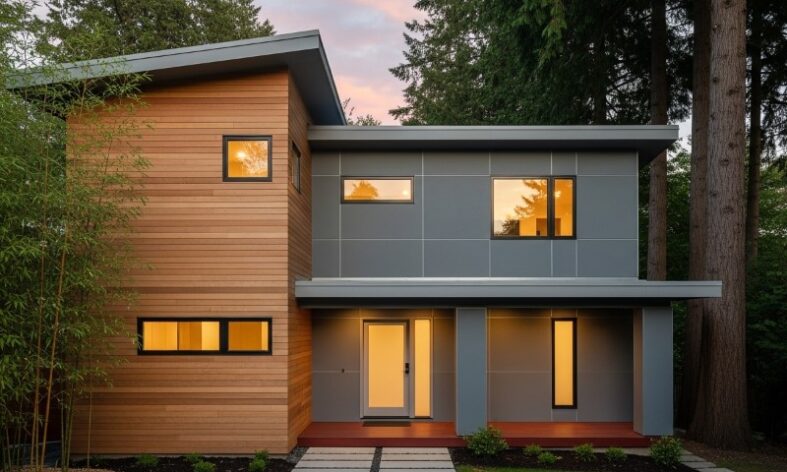
Sharp lines and flat surfaces can feel cold on their own, so we add wood to help balance that with texture and warmth.
Common areas where wood fits best include:
- Siding accents that break up large flat walls
- Soffits that add depth under roof overhangs
- Entryways that create a welcoming focal point
Used in small amounts, wood keeps the design clean while still adding character.
Grain patterns introduce subtle detail without making the exterior feel busy.
Another big advantage is how wood changes the overall mood of a home. Clean geometry can feel more livable and less rigid once natural materials are added.
Maintenance is something to think about early on.
Natural wood needs sealing or staining over time, and that is why many homeowners now look at alternatives such as:
- Engineered wood products
- Steel siding with woodgrain finishes
Both options keep the same visual warmth but reduce long-term upkeep.
Concrete (Modern Foundation)
Concrete sets the tone for a strong, solid surfaces give minimalist homes that bold and stable look without adding extra detail.
Continuous surfaces are often used to keep things clean and uninterrupted. Walls, facades, and even pathways can all follow the same visual language.
Surface finish changes the feel without adding complexity. Options usually stay simple:
- Smooth finishes for a polished, modern look
- Light texture for a bit of depth without distraction
Durability is one of concrete’s biggest advantages. It handles extreme weather and doesn’t need much upkeep.
Builders like Elythera Homes take a similar approach by focusing on materials that support long-lasting minimalist design.
Performance improves even more with advanced systems like insulated concrete forms and others.
Metal (Sleek and Industrial)
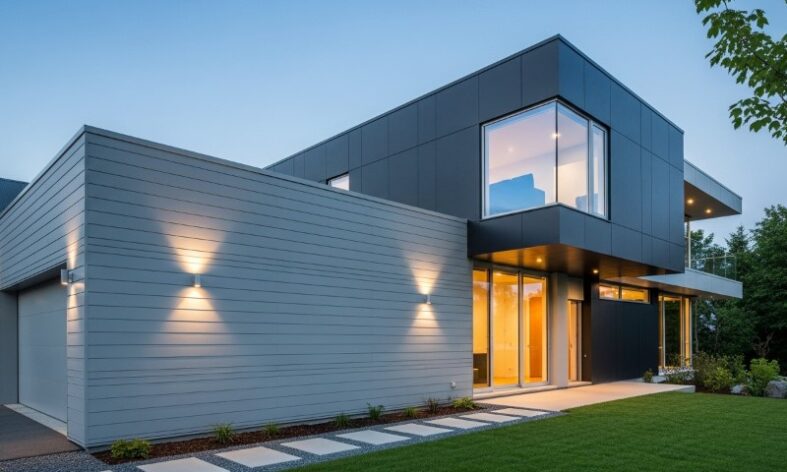
Metal comes with a crisp, precise look that works naturally with minimalist homes. Straight edges, flat panels, and consistent finishes help everything feel clean and controlled.
Choice of metal changes both appearance and performance.
Panel layout also affects the final look. Larger panels create a smoother appearance, while narrower ones add rhythm without making things busy.
Seams and joints are usually kept subtle so they don’t interrupt the flow.
Performance is one of metal’s biggest advantages. Coatings and treatments extend lifespan and reduce upkeep.
Roofing systems often rely on metal due to its durability and longevity. Wall panels and trim details follow the same logic, creating a consistent exterior.
Woodgrain steel continues to gain traction since it delivers warmth without the upkeep tied to real wood.
Fiber Cement (Versatile and Low-Maintenance)
When it comes to fiber cement, it makes it easier to achieve a clean look without constant maintenance. It adapts to different styles while staying durable over time.
Flexibility in design allows it to take on multiple appearances.
Panel sizing and layout can change how minimal the design feels. Larger boards tend to reduce visual breaks, which helps maintain a calm and simple exterior.
Durability plays a major role in its popularity.
Fiber cement handles everyday wear without many issues:
- No warping or rotting over time
- Strong resistance to fire exposure
- Protection against insects and pests
Climate performance also adds value. It handles moisture and temperature changes better than many traditional materials.
Siding remains the most common use.
Consistent color and finish over time make it a reliable choice for homeowners who want a long-lasting exterior without constant upkeep.
Brick (Refined and Timeless)
Brick can feel modern and minimal when used carefully because simpler layouts and controlled color choices keep it aligned with a clean design.
Pattern selection plays a big role. Instead of complex arrangements, minimalist homes often stick to straightforward layouts that keep attention on the overall form.
Surface texture also stays restrained. Smooth or lightly textured bricks help avoid visual noise.
Brick adds a sense of weight and structure without making the exterior feel heavy. Combining it with smoother materials creates contrast that still feels organized.
Longevity is a major benefit. Brick holds up over decades with very little maintenance, making it a dependable option for minimalist homes.
Glass (Transparency and Light)
Of course, among the most popular materials you will find glass. Glass brings openness and helps a home feel more connected to its surroundings.
Scale plays a big role in how glass is used. Larger openings create a stronger effect:
- Floor-to-ceiling windows that open up interior spaces
- Wide sliding or folding doors that connect indoor and outdoor areas
Framing stays minimal, so glass remains the focus. Thin metal or concrete frames help maintain clean lines and simple geometry.
Placement also matters. Strategic positioning can improve both light and comfort:
- South-facing glass to capture more daylight
- Shaded areas to reduce heat gain during warmer months
Natural light improves the overall atmosphere and reduces the need for artificial lighting during the day.
Interiors feel brighter and more open without adding extra elements.
Stone (Subtle Natural Texture)
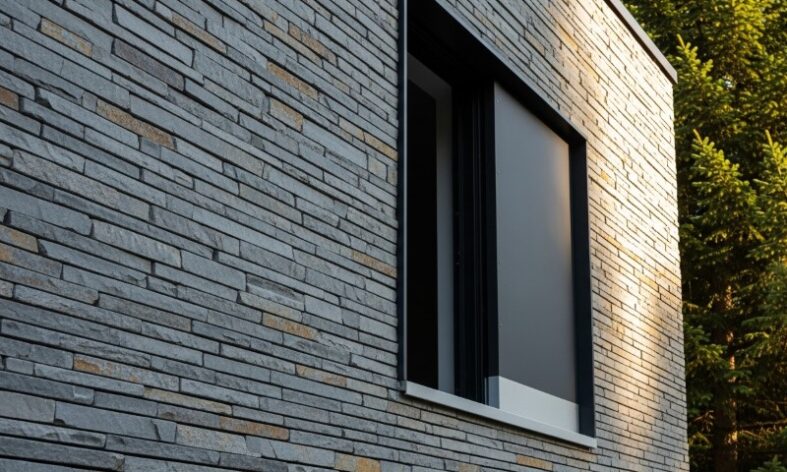
Finally, we want to point out the stone as a major material. It adds character through texture while keeping the overall design restrained. Small, intentional use works best in minimalist exteriors.
Stone type and cut influence the final look. Options often stay simple:
- Smooth-cut stone for a refined appearance
- Rougher finishes for a bit more texture without going too far
Color tends to stay neutral, so it fits into the overall palette. Natural tones work well alongside materials like concrete or metal.
Durability is a key advantage. Stone holds up well over time and requires minimal care.
Pairing it with smoother surfaces creates contrast that feels balanced rather than busy.
Color Palette Considerations
Simplicity in color helps reinforce minimalist design, and the core colors that form the base of most palettes are:
- White to keep things bright and open
- Black to define edges and add contrast
- Gray to balance everything out
- Beige to introduce a bit of warmth
Using one main color with subtle variations helps maintain consistency. Small shifts in tone add depth without making the design feel complicated.
Accent colors are used sparingly.
Material finishes also influence color perception. Wood tones or wood-look materials can warm up a neutral palette without adding visual clutter.
Consistency across surfaces keeps the exterior unified. Too many color changes can break the clean look that minimalist design depends on.
The Bottom Line
Minimalist home exteriors rely on intentional material selection. Wood, concrete, metal, fiber cement, brick, glass, and stone each contribute distinct qualities.
Simplicity remains the guiding principle. Durability and thoughtful combinations ensure long-lasting performance and visual clarity.
Careful choices support a cohesive exterior that remains timeless and functional.