

A sharp toothache wakes you up at 2 a.m. You take a painkiller, wait for it to work, and wonder whether you really need an emergency dentist or can leave the problem until Monday.
Some dental problems can safely wait for a regular appointment. Others require treatment within hours, particularly when there’s severe pain, infection, uncontrolled bleeding, or an injury involving a permanent tooth.
The important part is recognizing the difference. Waiting too long can turn a treatable dental problem into something more serious, while knowing what requires immediate attention can save you unnecessary worry and expense.
Signs You Need Emergency Dental Care
Not every painful tooth requires an emergency appointment. However, certain symptoms suggest that delaying treatment could put your oral health at risk.
Severe or Persistent Tooth Pain
A brief sensitivity to cold drinks isn’t necessarily an emergency. Pain that lasts for hours, keeps you awake, or prevents you from eating normally deserves more urgent attention.
Severe toothache may indicate deep decay, an inflamed dental nerve, an infection, or a cracked tooth.
Pay particular attention if the pain becomes worse when biting or doesn’t improve with appropriate over-the-counter medication.
Contact a dentist promptly rather than waiting several days to see if the discomfort disappears.
Swelling, Fever, or a Suspected Dental Abscess
Swelling around a tooth can indicate an infection, especially when accompanied by fever, a bad taste, or tenderness in the gums.
A dental abscess is a collection of pus caused by a bacterial infection. It may develop around a tooth’s root or within the surrounding gum tissue.
According to the NHS guidance on dental abscesses, an abscess requires urgent dental treatment and won’t resolve permanently without addressing the infection.
Access to urgent dental services becomes important in situations involving severe pain or suspected infection. For example, Akutt Tannlege Oslo is a local emergency dental care provider in Oslo, Norway, offering assessment and treatment for people experiencing sudden dental problems.
Seek immediate hospital emergency care if swelling makes breathing, swallowing, or speaking difficult. Rapidly spreading facial swelling or swelling affecting the eye also requires emergency medical assessment.
A Knocked-Out Permanent Tooth
A knocked-out adult tooth is one of the clearest examples of a time-sensitive dental emergency.
Immediate treatment offers the best chance of saving it. Ideally, the tooth should be assessed and reimplanted as quickly as possible, often within an hour.
Never wait until the following day simply because the bleeding has stopped.
A knocked-out baby tooth should not be pushed back into its socket because doing so could damage the developing permanent tooth underneath.
Uncontrolled Bleeding or Serious Facial Injury
A little bleeding after brushing or a minor gum injury may not require emergency treatment.
However, bleeding that continues despite firm pressure needs urgent assessment.
Serious injuries involving the jaw, face, or mouth may require hospital treatment, especially when accompanied by significant swelling, severe bleeding, or difficulty opening the mouth.
Dental Problems That May Be Able to Wait
Some symptoms are uncomfortable without necessarily requiring an immediate appointment.
The key is making sure they remain mild and don’t develop into something more concerning.
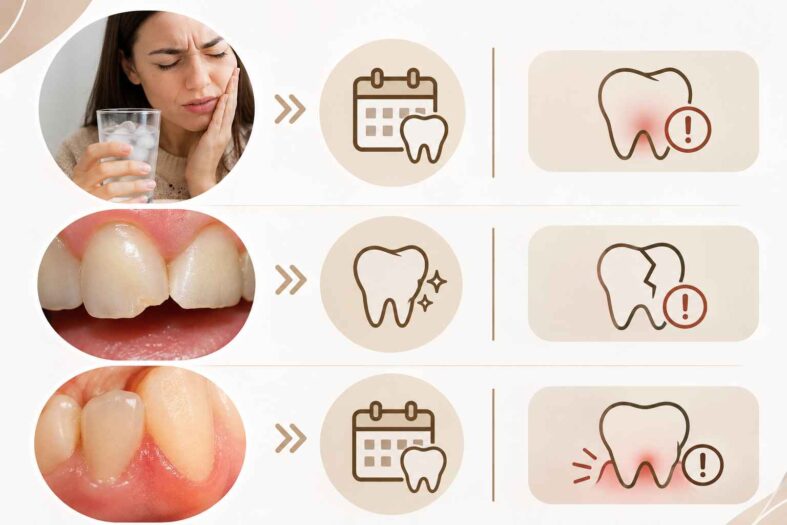
Mild Tooth Sensitivity
A short, sharp sensation when drinking something cold can result from exposed dentin, enamel wear, gum recession, or early decay.
If the discomfort disappears quickly and there are no other symptoms, a routine dental appointment may be appropriate.
However, sensitivity that becomes persistent, increasingly painful, or concentrated around one tooth deserves earlier investigation.
A Small Chip Without Pain
A minor chip that doesn’t cause pain, bleeding, or sharp edges usually doesn’t require overnight emergency treatment.
Still, a dentist should examine the damage to determine whether the tooth needs smoothing, bonding, or another repair.
While minor chips can sometimes be repaired with cosmetic bonding, more extensive cosmetic dental treatments should always be planned around the condition and health of the natural teeth.
A deeper fracture is different. If the tooth becomes painful, loose, or highly sensitive, seek urgent dental advice.
Minor Gum Irritation
Occasional gum tenderness can result from brushing too aggressively or food becoming trapped between teeth.
Gentle cleaning may help, but persistent redness, swelling, or bleeding should be assessed by a dentist.
If irritation develops into significant swelling, severe pain, or fever, don’t treat it as a routine concern.
What to Do Before Seeing a Dentist

Knowing a few basic first-aid steps can make dental emergencies easier to manage while arranging professional treatment.
The American Dental Association’s emergency dental guidance recommends different approaches depending on the injury or symptoms.
- Rinse your mouth gently with warm water or mild saltwater.
- Carefully floss if you suspect trapped food.
- Apply a cold compress to the outside of your cheek if swelling is present.
- Consider an appropriate over-the-counter pain reliever, following the label and any medical advice.
For a knocked-out permanent tooth:
- Pick it up by the crown, not the root.
- If dirty, gently rinse it with milk, saline, or clean water without scrubbing.
- If possible, carefully place it back into its socket without forcing it.
- Otherwise, keep it moist in milk or an appropriate tooth-preservation solution.
- Seek emergency dental treatment immediately.
Avoid placing aspirin directly against the gums because it can damage soft tissue.
Never attempt to drain a dental abscess yourself. Also avoid applying heat to facial swelling caused by a suspected infection.
These measures can provide temporary assistance, but they don’t replace dental treatment.
Why Waiting Can Make Dental Problems Worse

Dental pain can be unpredictable. A tooth may hurt intensely for several days before suddenly becoming less sensitive.
That doesn’t always mean the problem has improved.
When deep decay reaches the tooth’s pulp, inflammation or infection can damage the nerves and blood vessels inside it.
In severe cases, the pulp dies, and pain may temporarily decrease even though an infection remains.
Without appropriate treatment, bacteria can spread beyond the tooth’s root into surrounding tissues.
A cavity that might initially have required a filling may eventually need root canal treatment. If the tooth becomes too damaged to preserve, extraction could be necessary.
The financial implications matter too.
A routine filling generally costs considerably less than a root canal followed by a crown. Replacing a missing tooth with an implant can create additional expenses.
Patients managing healthcare costs for their families may also benefit from knowing who can be added to a health insurance plan, although dental benefits and eligibility rules depend on the policy.
However, not every toothache progresses to infection, and not every painful tooth needs a root canal.
Only a dental examination can establish what’s causing the symptoms and which treatment is appropriate.
How to Decide Whether to Call a Dentist Today
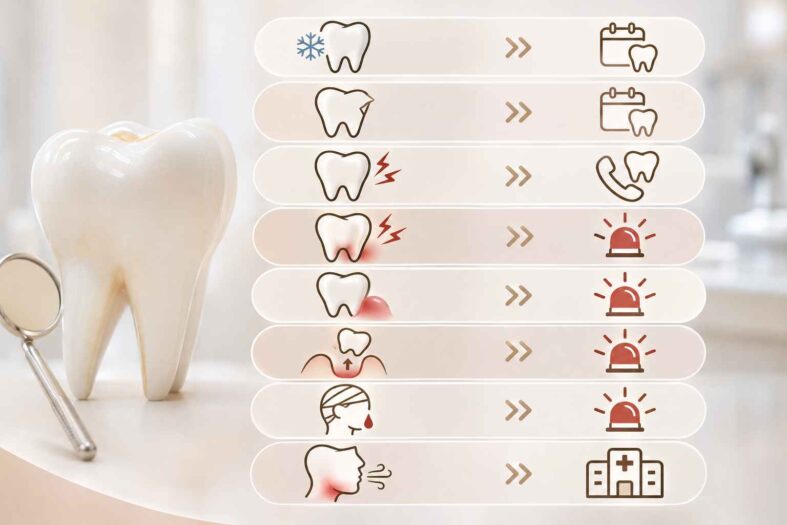
When you’re unsure how urgently to seek treatment, consider the following checklist.
| Symptom | Recommended action |
|---|---|
| Mild, brief sensitivity | Arrange a routine dental examination |
| Small chip without pain | Book a dental appointment soon |
| Toothache lasting more than two days | Contact a dentist |
| Severe pain affecting sleep or eating | Request urgent dental care |
| Gum or facial swelling, especially with fever | Seek urgent dental assessment |
| Knocked-out permanent tooth | Seek immediate emergency dental care |
| Uncontrolled bleeding or serious facial trauma | Seek emergency assessment |
| Difficulty breathing or swallowing with swelling | Go to a hospital emergency department immediately |
These recommendations are general guidance. A dentist may advise a different timeframe depending on your medical history, symptoms, and circumstances.
People with weakened immune systems or significant underlying medical conditions should be especially cautious about suspected infections.
When in doubt, contacting a dental practice for advice is better than trying to diagnose the problem yourself.
Don’t Wait for a Dental Problem to Become Unmanageable
A little sensitivity and a severely infected tooth can feel surprisingly similar in their early stages. That’s why changes in pain, swelling, and other symptoms deserve attention.
If discomfort is mild and temporary, arranging a routine examination may be enough. But severe pain, swelling, trauma, or bleeding should prompt faster action.
The goal isn’t to treat every toothache as an emergency. It’s to recognize when waiting creates unnecessary risks and get the right level of care before a manageable problem becomes harder to treat.